

You’ve sent the invoice. You’ve sent the polite "just checking in" email. You’ve even left a voicemail that was so courteous it would make a Canadian diplomat weep. And yet, the balance remains at $0.00.
If you are a business owner in British Columbia or Alberta, you know the feeling. It’s that slow-burning frustration that bubbles up every time you look at your Accounts Receivable aging report. You start wondering: Is it me? Did I do something wrong? Are they ever going to pay?
Here is the truth: It’s usually not about you. It’s also, surprisingly, not always about the money. Most of the time, the delay is fueled by a complex web of human psychology. Procrastination is a powerful force, and when it comes to debt, it’s rarely about "forgetting" and almost always about emotional avoidance.
At ICON Collection Solutions Inc., we’ve seen it all. From the small $500 invoice to the major $50,000 recovery cases, the psychological hurdles remain the same.
It’s Not Laziness, It’s Emotion Regulation
Research shows that procrastination is fundamentally an emotion regulation problem, not a time management issue. About 20% of adults are chronic procrastinators. When a client sees your invoice, they aren't just seeing a number; they are seeing a stressor.
Paying a bill often triggers negative emotions:
- Anxiety about their own cash flow.
- Fear of making the wrong financial move.
- Guilt for having let the bill go this long in the first place.
Instead of dealing with those feelings, they do what humans do best: they look at a cat video or reorganize their desktop icons. By pushing the task to "tomorrow," they get a temporary hit of relief. Of course, that relief is a lie, the anxiety just grows bigger the longer they wait (kind of like that weird sound your car started making three weeks ago).
The "Vicious Cycle" of Debt Avoidance
The longer a client delays, the harder it becomes for them to hit "send" on that e-transfer. This is what psychologists call a "vicious cycle."
- The Trigger: The invoice arrives.
- The Avoidance: The client feels stressed and decides to "look at it later."
- The Rumination: They start thinking about the debt constantly, which makes them feel even worse.
- The Ghosting: Because they feel guilty or overwhelmed, they stop answering your calls entirely to avoid the "shame" of the conversation.
By the time you reach the 60-day mark, the client isn't just avoiding the payment, they are avoiding the feeling of being someone who hasn't paid their bills.
The Hall of Fame: Funny (and Frustrating) Excuses We Hear in Western Canada
Since we operate heavily in Calgary, Edmonton, Surrey, and Vancouver, we’ve heard some truly "creative" reasons why the check isn't in the mail. If you’ve heard these, you aren't alone:
- The "Digital Bermuda Triangle": "I sent the e-transfer, but I think the internet was heavy that day, so it probably got stuck in the cloud." (Yes, someone actually said "the internet was heavy.")
- The "Natural Disaster" Defense: "A magpie stole my checkbook off the dashboard of my truck while I was grabbing a double-double at Tim’s."
- The "Accounting Houdini": "My accountant went on a spiritual retreat in the Rockies and took the ledger with him. He won’t be back until the solstice."
- The "Grandmother" Gambit: We’ve had debtors claim their grandmother passed away... three times in one year. That’s one resilient family tree.
While these are funny in hindsight, they are actually defense mechanisms. They are "stalling tactics" designed to buy the procrastinator a few more days of emotional peace.
How to Break the Cycle (Without Losing Your Mind)
So, how do you move a client from "avoidance" to "action"? You have to lower the emotional barrier to entry. Here are three psychological triggers you can use right now:
1. Ask Open-Ended Questions
Instead of saying, "Where is my money?", try: "What concerns do you have about making this payment today?"
This forces the client to move from an emotional "avoidance" state into a logical "problem-solving" state. It uncovers the real issue, maybe they’re waiting on a big contract to land, or they’re confused by a line item on the invoice.
2. Offer a "Face-Saving" Way Out
If a client has been ghosting you, they are likely embarrassed. Give them a way to pay without feeling like a "bad person."
- "I know things have been busy for everyone in Calgary lately. Let's get this off your plate so you don't have to think about it anymore."
You aren't the "bill collector"; you are the person helping them reduce their stress.
3. Use the Power of "Micro-Steps"
If the full amount is overwhelming, suggest a 2-step debt repayment plan. Sometimes, paying $500 of a $2,000 bill breaks the "paralysis" and gets the momentum moving again.
When Psychology Isn't Enough: The Case for Professional Intervention
You are a business owner, not a therapist. You have a business to run, employees to pay, and a life to live. Spending your Tuesday nights wondering why "Dave from Red Deer" won't return your texts is a recipe for burnout.
Sometimes, the best way to fix a client's procrastination is to change the "messenger."
When a third party like ICON Collection Solutions Inc. steps in, the psychology shifts instantly. The "I’ll do it later" thought process is replaced by "Oh, this is serious now." We provide that necessary jolt to move the debt from the bottom of their "to-do" list to the very top.
We specialize in maintaining your professional reputation while being firm enough to get results. Whether you need a collection agency in Surrey or the best collection agency in Alberta, we understand the local nuances and legal frameworks (like the Alberta Fair Trading Act or the BC Business Practices and Consumer Protection Act) to ensure everything is done right.
Why Speed Matters (The 70% Rule)
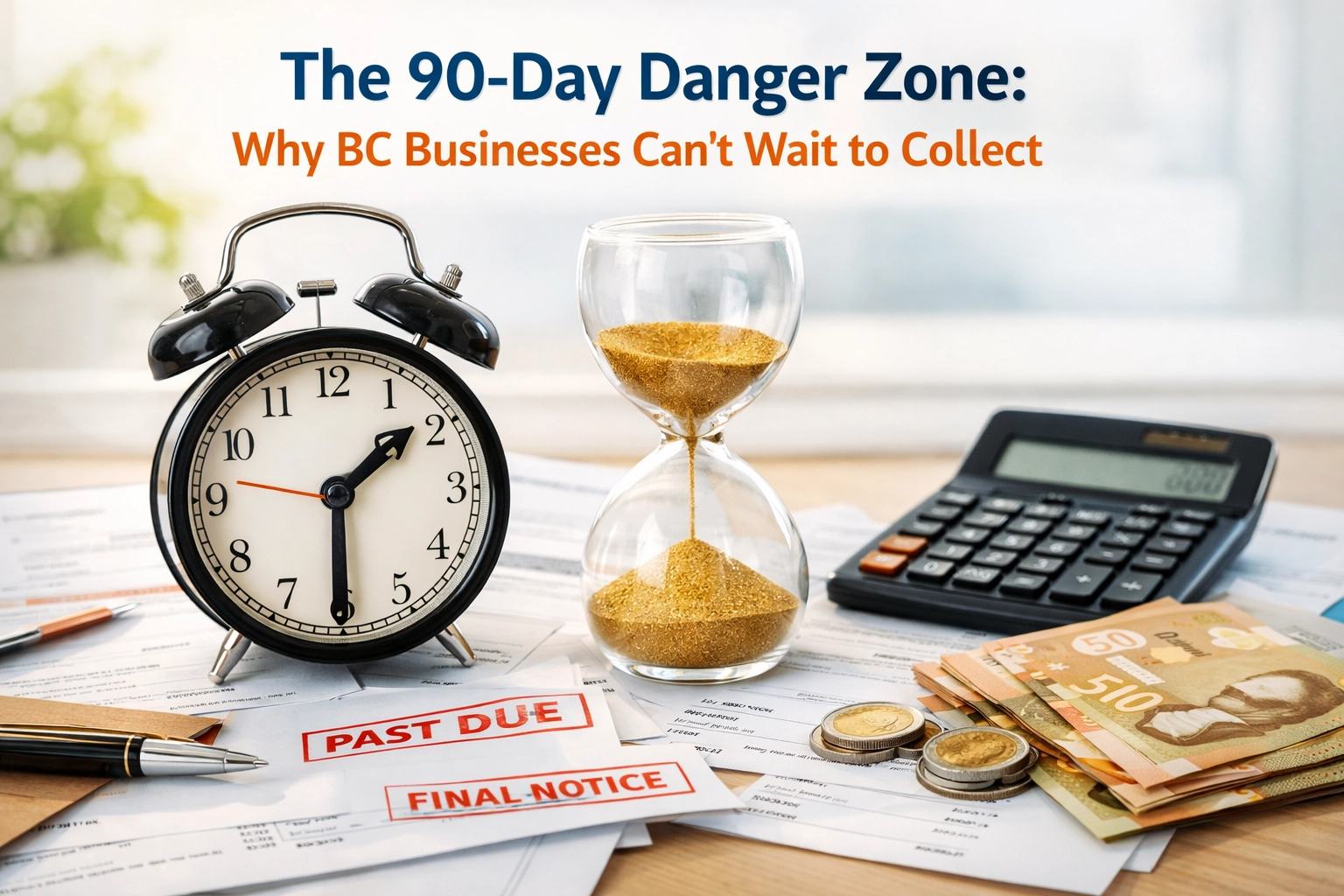
In the world of debt recovery, time is your greatest enemy. Data suggests that the probability of collecting a debt drops significantly after 90 days. Once a debt hits the six-month mark, recovery rates can plummet. However, by using a professional service early, many businesses see a 70% recovery rate on accounts that seemed "hopeless."
Don't let your hard-earned revenue turn into a "bad debt" write-off because someone else was too stressed to open an email.
Quick Tips for Better Receivables Management:
- Be Consistent: Send reminders on the same day every month.
- Be Clear: Ensure your payment terms are bold and easy to find.
- Be Proactive: Check out our guide on 3 simple ways to better manage accounts receivables.
Final Thoughts: Reclaim Your Time
You didn't start your business to become a debt collector. Every hour you spend chasing a procrastinating client is an hour you aren't spent growing your brand or achieving work-life balance.
If you’re tired of the excuses (even the funny ones about magpies), let’s talk. We’ve helped businesses across Western Canada recover tens of thousands of dollars while keeping their professional dignity intact.
Ready to stop the ghosting and start the recovering?
Contact us today and let’s reclaim what’s rightfully yours. Whether you’re looking for collections in Calgary or services in Edmonton, we’re here to help you get paid.
This content is for informational purposes only and does not constitute legal advice.






.jpeg)
.png)
.png)
.png)
.png)

%20(1).jpg)































%20(1).jpg)

.jpg)


